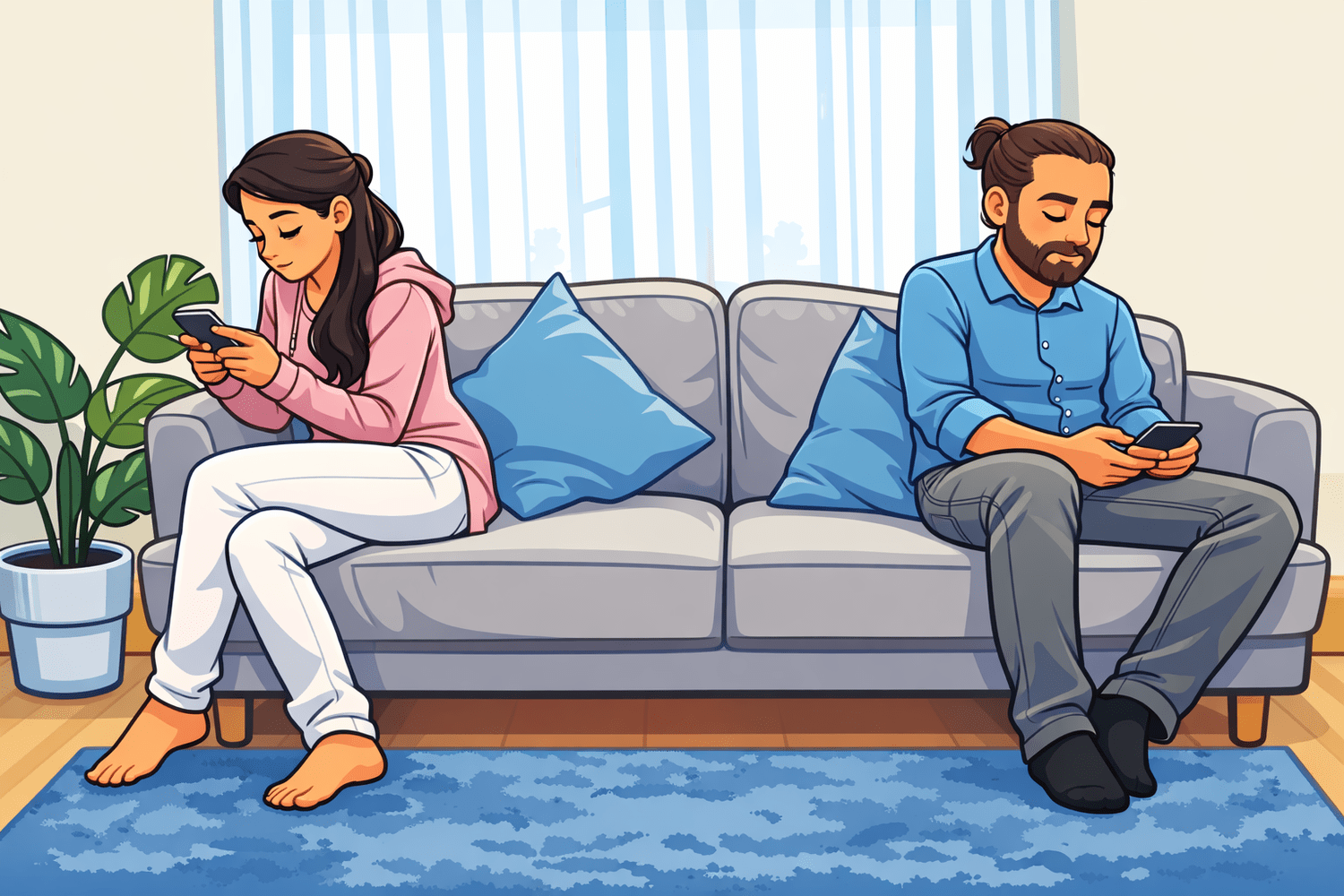
Phubbing: Is Your Phone Stealing Your Partner's Attention?
“Darling, please put your phone away!” If this phrase sounds all too familiar in your relationship, it's time to pay attention. The seemingly innocent act of "just checking 148 more emails" or scrolling through social media while your partner tries to connect, known as phubbing, can have profound and often unforeseen consequences for your connection.
In an age where our smartphones are extensions of ourselves, the line between helpful tool and relationship saboteur has become increasingly blurred. This article delves into the phenomenon of phubbing, exploring its definition, its subtle and not-so-subtle impact on intimacy, and practical strategies to safeguard your most important personal relationships from digital intrusion.
What is Phubbing, and Why Does it Hurt Relationships?
The term "phubbing" is a clever portmanteau, merging the words "phone" and "snubbing." To phub someone means to ignore them in a social setting by focusing on your mobile phone instead of engaging in the conversation or activity at hand. While this can happen with friends, family, or colleagues, its impact is particularly acute in romantic Phubbing: How Your Smartphone Kills Your Relationship. When you phub your partner, you are, intentionally or not, signaling that your device holds more importance than their presence and words.
The immediate fallout from phubbing is often a feeling of neglect and unimportance on the part of the snubbed partner. Imagine trying to share a significant event from your day, only to see your loved one's gaze fixed on a glowing screen, their replies monosyllabic or delayed. This experience can be incredibly frustrating and can provoke conflict. Over time, these small acts of inattention can accumulate, eroding the emotional connection and fostering resentment. Studies have already begun to show a clear link: couples where phubbing is prevalent report lower levels of relationship satisfaction. It can lead to increased arguments, feelings of exclusion, emotional injury, and even jealousy as one partner feels perpetually in competition with a device.
The Unsettling Statistics: Our Digital Obsession's Toll on Intimacy
Our pervasive attachment to smartphones is well-documented, and the numbers are often startling. Statistics from Austria, for example, reveal a concerning trend: a week without sex sounds more appealing to many than seven days without a smartphone. While correlation doesn't always equal causation, this highlights a significant shift in priorities and perceived necessities. The average Austrian reportedly checks their phone 84 times a day, indicating an almost continuous engagement with their device.
This digital obsession isn't limited to adults. The Youth Trend Monitor 2019 found that around 7 percent of young people actually perceive their smartphone as a body part. Such deep integration into daily life inevitably spills over into our closest relationships, stealing not just moments but our fundamental attention span and perceived interest in our partner. When one person's eye constantly darts to their phone screen, the message received by the other is clear: "You don't have my full attention." This isn't just about multitasking; it's about the deep human need for presence and connection that a flickering screen simply cannot fulfill.
It's a trap we often fall into ourselves, as psychologist Prof. Anne Milek notes: we're quicker to notice and be irritated by phubbing from others, but less likely to recognize or admit to our own similar behavior. We tend to measure with a double standard, perceiving others as being on their phones more often, while overlooking our own tendencies to do the same.
Beyond the Surface: The Deeper Impact on Connection and Conflict
While the immediate effects of phubbing are evident, its deeper impact on relationship dynamics can be more insidious. It hinders genuine connection by creating a constant barrier to authentic interaction. When one person is constantly distracted, it becomes difficult to pick up on subtle non-verbal cues – a shift in tone, a fleeting expression, a moment of shared silence that speaks volumes. These are the nuances that build empathy, understanding, and intimacy in a Phubbing Beziehung.
The phone transforms shared spaces into individual bubbles, preventing the kind of "being present" that makes a relationship thrive. It's not just about what we miss, but what we fail to create – shared memories, deep conversations, spontaneous moments of laughter or comfort. The feeling that your partner is more invested in their digital world than the real one can lead to profound emotional distance, making both partners feel lonely even when they are physically together.
Paartherapeutin Sandra Teml-Jetter points out that while phubbing as a term is new, conflicts in relationships are not. "Conflicts are part of a partnership and seek a stage. The smartphone is one of them," she explains. The issue isn't always the phone itself, but how couples manage conflict, regardless of its 'stage.' If communication is already strained, phubbing can become another easy target, exacerbating existing problems rather than creating entirely new ones. It provides a convenient focal point for underlying dissatisfaction.
Navigating the Digital Divide: Expert Insights & Solutions
So, should we simply ban phones when our partner is around? Not necessarily, says Teml-Jetter. The key lies in how the smartphone is used. Is it being used to answer a partner's question, share a funny photo, or look up information together? Or is it being used as a constant distraction, preventing genuine connection? "I find it problematic as soon as a smartphone impedes or prevents connection," she clarifies. The distinction is crucial: using the phone as a shared tool versus an individual escape.
To prevent phubbing from harming your relationship, here are some actionable strategies:
- Establish Designated No-Phone Zones & Times: Couple's therapist Sandra Teml-Jetter suggests specific times and places where phones are off-limits, such as in bed and during meals. These are crucial moments for connection and intimacy. Consider a 'phone basket' at the door or a rule that phones stay out of sight during dinner.
- Embrace Digital Detox or Digital Wellbeing: Consciously schedule periods away from your devices. This could be an evening, a weekend, or even just an hour dedicated to uninterrupted time with your partner. Many phones and apps now offer digital wellbeing tools to monitor and limit screen time, helping you become more aware of your habits. For more in-depth advice on preventing this issue, check out Stop Phubbing: 3 Tips to Protect Your Relationship.
- Silence Notifications: Even if your phone is nearby, turning off notification sounds and vibrations can significantly reduce interruptions. This allows you to be present without constant digital pings pulling your attention away. You can still glance at it occasionally for important matters, but the urgency is removed.
- Open Communication is Key: Talk to your partner about how phubbing makes you feel, and encourage them to share their feelings too. Discussing expectations around phone usage in a calm and non-accusatory manner can lead to mutually agreed-upon boundaries. This shared understanding is vital for navigating the digital landscape together.
- Lead by Example: Be mindful of your own phone habits. If you want your partner to put their phone away, ensure you are doing the same. Model the behavior you wish to see in your relationship.
Phubbing is a modern challenge, but its solutions are rooted in timeless principles of respect, communication, and conscious presence. By acknowledging the problem and actively working together, couples can reclaim their attention and strengthen their bond against the allure of the digital world.